Aqua Ghid
Blog entry by Aqua Ghid
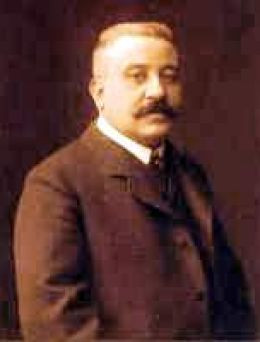
Photo source / Credit: RightWords.ro
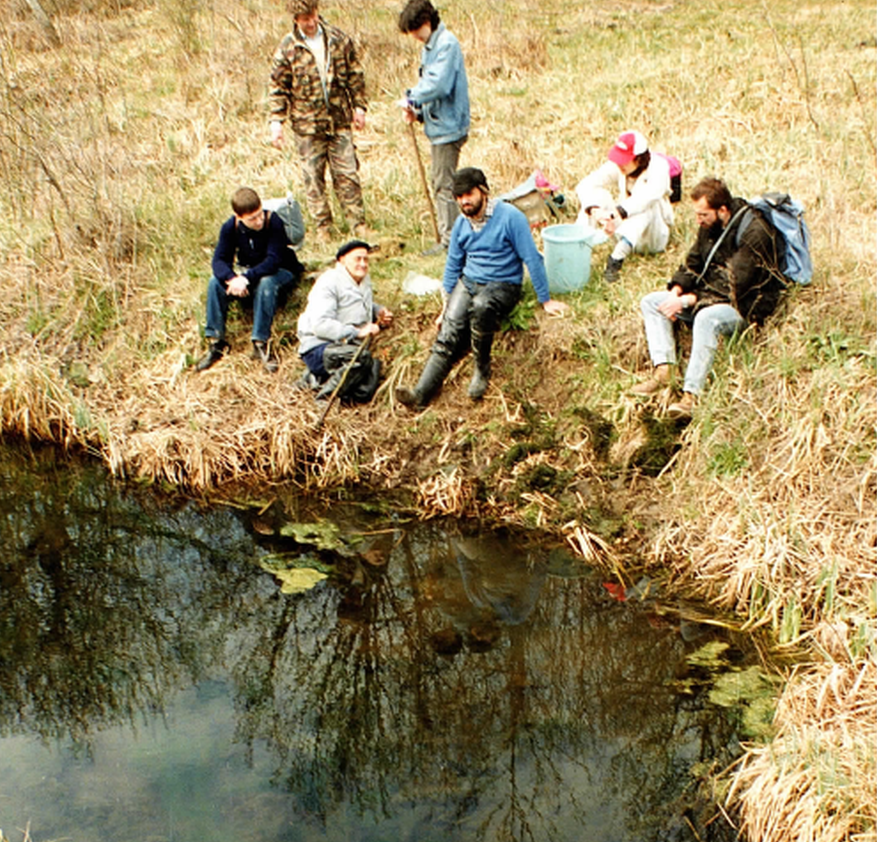
1995, Comana, scientific fishing, alongside Acad. Petru Bănărescu on the banks of Gurbanul stream! Photo Credit: Crăciun Nicolai
In the heart of Bucharest stand two representative buildings of the present moment, symmetrical in time and cultural space: one dedicated to science, the other to governance. Today, across Victoriei Square, one can imagine how the echoes of historical decisions made at the turn of the century, in the 1920s and 1930s, by the visionaries of the Romanian Academy—Emil Racoviță, Grigore Antipa, Alexandru Borza, Ion Simionescu—shake the Government building to its foundations. The government must now make a historical decision: implementing reform R.2 of the National Recovery and Resilience Plan (NRRP)—the cornerstone of restructuring protected area management in Romania.
If we look at the map of Romania today, we witness a troubling paradox. In the 1920s and 1930s, the visionaries of the Romanian Academy—Emil Racoviță, Grigore Antipa, Alexandru Borza, Ion Simionescu—created the first nature protection law (promulgated in 1930) and delineated the country's first real protected areas, covering approximately 2.54% of the national territory.
Those were not lines drawn at random on a map, but pure scientific sanctuaries, identified step by step in the field with microscopes, boots, and field notebooks! The ink in their notebooks was forged from the same matter as the night in the forest.
In 1930–1932, on the country's vast maps, there were no satellites to carve out cold, perfect polygons from thousands of kilometers above. There were no fluorescent screens, thermal sensors, or GIS algorithms to measure life in pixels. There were only them: a handful of scientists with boots caked in the fresh mud of Retezat, holding binoculars, pocket magnifiers, heavy brass microscopes, and an almost mystical devotion.
When they traced those first lines covering that 2.54% of the nation's body, they did not draw administrative borders. They defined sanctuaries. Every line in a field notebook was a handwritten promise, born from a knowledge of nature so profound that they could feel its breath before seeing it. They knew where the last nest lay hidden, where the secret path of the mountain fish passed, and where the earth needed to remain silent.
And this army of visionaries was not alone in the wilderness. Standing behind them was a silent and steadfast guard: devoted foresters. People raised in the shadow of ancient oaks, for whom the reserve was not an article of law, but their very home. They did not need online training or promotional posters with sterile slogans. Their school had been the simple life and ancestral order of the Romanian peasant—formed under the canopy of the forest, taught generation after generation that nature is not conquered through violence or plundered, but respected with sacred wisdom.
For these ancient people, the veneration of nature was built directly into the pillars of faith in God. Felling an ancient tree without purpose or poisoning a water spring was not merely a loss, but a sin against the Divine Order. Romania's first Nature Protection Law did nothing more than embody in legal articles what was already engraved in the nation's soul: the spirit of the land is defended with the soul, not with office paperwork.
When the law found its spirit directly applied in the field, and faith intertwined with the highest science, this land became unconquerable. Without GPS, but guided by the stars and a love for the land, they left behind a legacy that sustains us to this day—a fortress of greenery and living water that no modern propaganda can ever replace.
Then came the Great Wave of Concrete.
The 1970s brought with them the heavy roar of industrial machinery and a megalomaniacal dream: taming every drop of water in the Carpathians. On the drafting boards in Bucharest, mountain rivers were no longer living arteries of the earth, but simple flow rate lines, cubic meters per second, and cold calculated megawatts. Dynamite shattered the silence of virgin valleys, and bulldozers bit ruthlessly into mountains protected since the 1930s. The regime wanted it all: piping the rivers, pumping water up mountains, locking everything in concrete.
But in the path of this river of cement stood one man.
Petru Bănărescu. A scholar frail in appearance, but carved from the hardest rock of the Academy. While official rhetoric proclaimed the conquest of nature, Bănărescu traveled to construction sites across the country carrying under his arm not folders of political directives, but his field kit, microscope slides, and a world-class scientific authority that not even the Party dared to trample underfoot.
When he discovered the Romanian darter (Romanichthys valsanicola / *asprete*)—the living fossil, a relic fish that survived unscathed since the era of dinosaurs in the clean waters of the Argeș and Vâlsan rivers—Bănărescu saw more than just a species. He saw a divine testament to continuity. He understood that if the *asprete* perished under the grinding weight of gravel and cement, a piece of the planet's living memory would die with it.
The battle moved from the river valley to technical approval committees, into cramped ministry rooms where the smell of ink clashed with sweat and the fear of unfulfilled quotas. It was an extremely dangerous game of chess. In front of engineers convinced that "concrete means civilization," Bănărescu did not raise his voice; instead, he placed facts, data, anatomy, and field ecology on the table.
He spoke about ecological flow—that minimal breath of life without which a river becomes a dead drainage ditch. He fought for fish ladders, for maintaining natural riverbeds, and for preserving spawning grounds. It was not easy; he was often viewed as a romantic idealist or an obstacle in the path of "socialist progress." But through his monumental stubbornness, supported by a handful of enlightened hydro-engineers—people who understood that a project lacking respect for the river would collapse both morally and technically—he won concession after concession.
Where the party intended to drain a valley completely, Bănărescu allowed the water to flow. Where blind concrete walls were planned, he enforced windows for life. The *asprete* survived. The rivers kept breathing.
He was the silent bridge between the sacred ideal established in 1930 and our present day. He proved that even in the darkest night of dictatorship, a single individual armed with scientific truth and love for their heritage can halt a mountain of concrete.
And thus, the torch has been passed to the present generation.
Today, the dynamics of yesteryear have taken on new forms. The roar of 1970s bulldozers has been replaced by the rustle of files in climate-controlled offices and the cold glow of computer screens. Instead of the "five-year plan," the rhetoric now invokes "energy urgency" and "quick-fix solutions." On paper, through a few lines of text drafted behind a desk, everything seems simple: carve out a piece of a mountain, issue an exemption, remove a zone from protected maps, and pretend an old concrete ruin in the mountains turns overnight into a nation's salvation.
The stake is no longer just a wall forgotten by time, but the entire surrounding basin—ancient forests, alpine meadows, and whole valleys. Beside cracked, silent, waterless concrete, speculative dreams have surfaced: promises of guesthouses overlooking mirrored waters, roads paved with public funds, and real estate ventures disguised under the mantle of energy independence.
Yet, standing against this new wave of paperwork and televised slogans is a new shield: S.E. AQUATERRA.
Carrying forward the legacy of the 1930s field notebooks and the scientific resolve of Petru Bănărescu, field experts have refused to stay silent. They did not come with empty slogans or hollow words; they brought back to the table the only weapons that cannot be forged: grassroots field science, law applied in its true spirit, and technical truth.
While public debate attempts to divide and point fingers at hypothetical culprits, AQUATERRA stated the plain truth that the system sought to bury: true green energy is not obtained by sacrificing the last sanctuaries within our historical 2.54% reserves, but through reason. Instead of sinking hundreds of millions of euros into non-functional, waterless ruins, you modernize and upgrade the existing 180+ major hydroelectric plants—yielding eight times more clean, affordable energy without cutting down a single additional oak.
Today's battle is fought not with dynamite, but with ichthyofauna studies, technical memorandums, and unyielding ethical principles. AQUATERRA defends not only waters and fish, but the very dignity of a century-old legacy. For as long as there remains a single person in the valley ready to pull on field boots and defend the heritage of our forebears, the mountain will not be turned into a commodity, and the river will keep its living path toward the future.
If the great scientist Grigore Antipa were to walk today along the bank of a hastily dammed mountain river or look at Natura 2000 network maps overlaid with short-term interests, I am convinced he would not raise his voice. He would speak with that solemn composure of a man who understood, before anyone else, that nature is a living organism, not an arrangement of figures on an accounting balance sheet.
Preserving his visionary tone, here is what I believe he would tell us today:
“Gentlemen,
I traveled across this country when its rivers were still carving their own paths through the mountains, and I learned a simple truth: a nation is not built merely by pouring concrete into momentary economic promises, but by preserving intact the balance between humanity and the land that sustains it.
I founded the protection of natural monuments and fought for field science not to put locks on mountains, but to give human reason a guiding compass. It astonishes me to see today that you call 'progress' the deliberate destruction of a century-old legacy, viewing a river merely as a source to fill pockets or reservoir basins.
Do not be deceived by the noise of headlines or the clever words from office desks. A country's true independence lies in the intelligence with which it uses its already harnessed resources, not in sacrificing its last treasures for a handful of silver. Concrete crumbles, hastily written laws fade, but a killed river and a felled forest will never return a single drop of life.
To those who still have the courage to look into the depths of the waters and defend life as God entrusted it to these lands, I say only this: Do not fear! Science, truth, and respect for our ancestors' legacy are the strongest walls you can ever build.”
And if he were to summarize everything in a single sentence, Antipa would likely remind us of his lifelong creed: “Nature is not conquered by violence, but mastered through understanding.”