Aqua Ghid
Postare pe blog de către Aqua Ghid
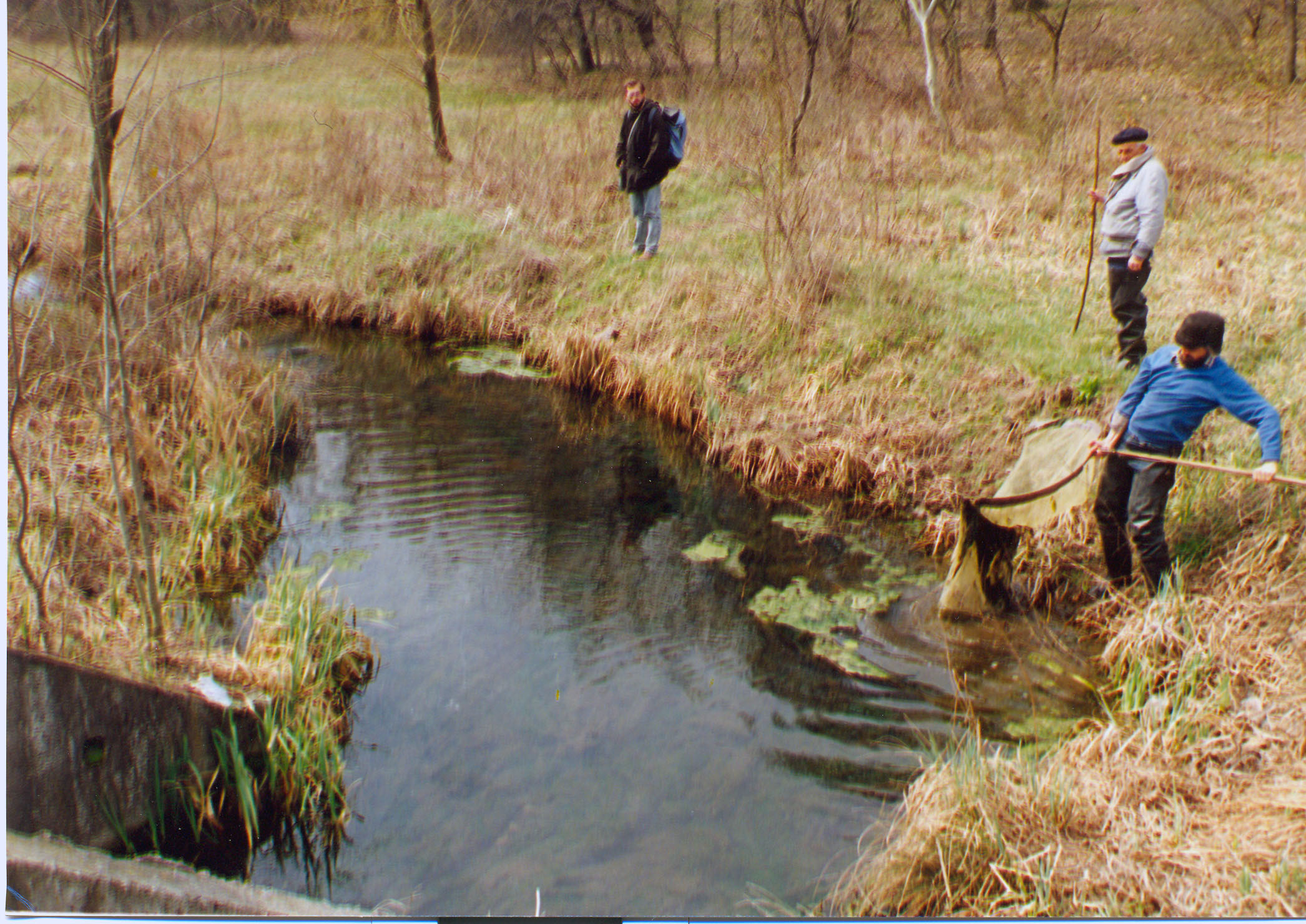
1995, Comana, scientific fishing with Academician Petru Bănărescu on the banks of the Gurbanul Stream! Photo credit: Crăciun Nicolai
MEMORANDUM Restructuring Protected Area Management in Romania
Ref.: S.E. AQUATERRA Technical-Scientific Solution on Re-examining the Hydropower Plants Law / Unlocking Energy Investments and the MPR® (OECM) Model
The Ecological Society AQUATERRA (founded in 1993, represented by Lecturer Nicolai CRĂCIUN, PhD) submits its Official Position and institutional opportunity solution regarding the re-evaluation of the Law modifying protected area boundaries for hydropower projects.
S.E. AQUATERRA firmly supports the necessity of a rigorous re-examination of this legislation. We consider this step essential and highly responsible, opening the path to correcting legislative overlaps, avoiding NRRP (Milestone 34) risks, and adopting a scientifically grounded solution.
Below are our technical, economic, and institutional opportunity clarifications, alongside a solution integrating strict conservation with energy security:
1. The Truth About the 2.54% Strictly Protected Zones (Debunking Disinformation) The current strictly protected area (~2.54%) is not the recent achievement of any consultancy team or temporary activism. It represents a historical heritage established as early as 1928 under the Commission for the Protection of Nature Monuments (founded by Emil Racoviță, Alexandru Borza, and Grigore Antipa) and preserved on the ground through the continuous effort of the forestry corps. Public attempts to use these figures to generate panic or media speculation represent unfounded disinformation.
2. Energy Reality Explained Simply (Data and Real Alternatives)
- Real Stake in the National Energy System: Completing historical hydropower projects initiated before 1989 (such as Răstolița or Bumbești-Livezeni) would contribute only 1% – 1.5% to national energy production, while requiring massive investments exceeding €400–500 million and causing irreversible damage to riverbeds within protected areas.
- The Smart and Fast Alternative: Simply retrofitting and modernizing over 180 existing operational hydropower plants in Romania (on the Danube, Olt, Argeș, Siret, etc.) with high-efficiency turbines can generate a direct energy gain of 8% – 10%—eight to ten times more than all blocked historical projects combined—at significantly lower costs and with ZERO additional environmental impact.
3. Energy Company Accountability: Applying the "Polluter Pays" Principle Unlike energy operators in France, Norway, Germany, the US, or Canada, major Romanian energy operators (including Hidroelectrica) have neglected basic ecological restoration duties for over three decades:
- Mandatory Fish Ladder Retrofitting: Existing fish ladders at small hydropower plants and dams are improperly designed, blocking upstream and downstream migration. They act as deadly barriers to fish species and must be urgently rebuilt through mandatory investment programs.
- Direct Funding Mechanisms: Energy operators should be legally mandated (via the 20% sponsorship tax quota or directly from profits) to fund multi-annual active conservation, breeding, and repopulation programs for endangered species (Hucho hucho, Romanichthys valsanicola, etc.). Historically, major projects consulted academic figures like Academician Petru Bănărescu; this scientific rigor must be reinstated.
4. Reforming Biodiversity Assessment and Monitoring (24.6% of National Territory) A major structural flaw within the Ministry of Environment over recent decades involves how Natura 2000 inventory and monitoring contracts are awarded:
- Violation of Scientific Criteria: Monitoring contracts were often awarded to inexperienced firms, ignoring strict research standards (PhD qualifications, ISI-indexed publications, Hirsch index) applied by the Ministry of Research.
- Academic Community Involvement: Romania has over 36 biology faculties, 50 natural science museums, and 25 botanical gardens with thousands of specialists who have been systematically sidelined.
- Paradigm Shift: Monitoring 24.6% of protected national territory cannot be conducted solely from administrative offices. The Ministry of Environment must embed rigorous academic criteria into tender specifications, re-engaging universities, institutes, and professional NGOs in active conservation.
5. Solution – Genuine Sustainable Development & The MPR® / OECM Model S.E.& The MPR® / OECM Model S.E. AQUATERRA does not advocate blocking national infrastructure, but rather a sustainable compromise based on environmental science:
- Defining the Energy Footprint: Where concrete was already poured prior to 1990, the physical footprint of buildings and dams can be punctually excised from Natura 2000 sites, allowing operational status under energy security regulations.
- Protecting Water and Fauna: Energy operators must legally guarantee strict environmental flow rates, construct modernized fish ladders, and financially support repopulation initiatives.
- Real Aquatic Protection via the MPR® (OECM) Model: Priority Biodiversity Areas (ZPB) catalogs must be updated to explicitly include active riverbeds (the water column). We propose implementing the international Other Effective Area-Based Conservation Measures (OECM) framework—supported by IUCN/CBD—via AQUATERRA’s patented Romanian instrument: Private Microreserves (MPR®). These enable voluntary land conservation partnerships, strictly protecting endangered species without impeding sustainable economic activities.
Conclusion Romania can secure energy independence while safeguarding its unique natural heritage by relying on field science, enforcing academic standards in evaluations, and rejecting both political populism and office-bound activism.
Respectfully,
Lecturer Nicolai CRĂCIUN, PhD
President, Ecological Society "AQUATERRA" Romania
Faculty of Biology – University of Bucharest
SOCIETATEA ECOLOGICĂ AQUATERRA Pentru Studiul și Protecția Florei și Faunei Sălbatice (AQUATERRA Ecological Society for the Study and Protection of Wild Flora and Fauna)
Reprezentată prin / Represented by: Președinte lect. dr. Nicolai Crăciun (University of Bucharest, Faculty of Biology)
Adresă / Address: Splaiul Independenței nr. 91-95, Sector 5, București, Cod poștal 050095, Romania
Web: seaquaterra.org | Official E-mail: office@seaquaterra.org | Direct Contact (President): +40 732 648 098 (nicolae.craciun@yahoo.com)
Media & Corporate Inquiries: Iulian Ghețău- PR & Digital Manager (+40 742 122 292 | office@seaquaterra.org)
CUI / Tax ID: 8046291 | Cont Bancar Oficial (IBAN): RO10 RNCB 0090 0005 0916 0001 (BCR Lipscani)
Reg. Asociațiilor: Nr. 2/PJ/08.01.1993 (Nr. înreg. 35/11.02.2002, Dosar 41/1992)